Sabrina & Jacky
February 12, 2026
The New Black (& Male) Sellouts Part II
February 26, 2026Sabrina & Jacky
February 12, 2026The New Black (& Male) Sellouts Part II
February 26, 2026The New Black (& Male) Sellouts:
Part I, Hammer v. Pac
I first time I heard the term “sellout” was in 1992. I was watching the unrivaled Black sketch comedy show, In Living Color. In one sketch, the writers decided to parody the single biggest rapper in the world in the early 90s’, MC Hammer, and his blockbuster single, “Too Legit to Quit.” In the bit, “Too Sold Out to Quit,” Tommy Davidson plays a dancing, rapping, Hammer, wearing a bold yellow suit and flanked by an army of Black male dancers clad in black. The opening lyrics to the original song, in which Hammer describes his hustle, are replaced by a litany of brands Hammer is ready to shill for:
Pepsi. Taco Bell…Hammer, get this clear. Gimme money. “Your Ad Here.”
As a kid, I remember finding the sketch funny, even though it wasn’t clear to me why he was being dissed. When I asked my parents about it, they explained that he seemed to be happy to license his image to any company in exchange for a bag of cash. In other words, he’d “sold out” because he seemed to be willing to associate himself with anyone or anything, if the money was right.
2I later began to wonder about this representation of Hammer, that of a sellout. As I grew older, I came to understand that the term “sellout” had been used by African Americans during and after slavery to describe a Black person who would betray the interests of Black people writ large in order to score a personal come up. From what I knew about Hammer, he’d tried to portray a message of Black unity, community engagement, and collective success. Shouldn’t we want major brands to support this message? I thought.
But to understand why Hammer was being called out in 1992, we have to understand the changes rap music was making, and how that affected our perception of the sellout.
* * *
Stanley Kirk Burrell, professionally known MC Hammer, was born and raised in Oakland. One of eight children, he grew up with next to nothing, owing in part to his father’s habit of losing money at poker tables. A rabid Oakland A’s fan, as a boy Stanley used to dance in the parking lot before Oakland A’s games to make himself a little change. When the A’s owner, Charlie Finley, caught his act, he hired him to be their bat boy. The players started calling him “Hammer,” an homage to the home run king “Hammerin’ Hank Aaron.”
After a brief stint in the Navy, Stanley decided to return to his roots in entertainment. He added rapping to his skills as a performer, and decided not just to cut an album, but to create a label. Hammer released his first album, Feel My Power, on his label Bustin’ Records in 1986. After moving over 60,000 units, largely from the trunk of his car, he had major labels chomping at the bit to sign him.
His second album, Let’s Get it Started, released in 1988 with Capitol, shattered existing rap sales records. The album went multi-platinum, the first inkling of the massive sales potential of this burgeoning genre. The third album, Please Hammer Don’t Hurt ‘Em, which dropped in 1990 was the first ever rap record to achieve diamond status. From that moment on, Hammer was no longer simply an MC. He was a global celebrity, and a major brand in his own right. This enabled him to start making some unbelievable sponsorship deals.
Please Hammer Don’t Hurt ‘Em had a commercial sponsorship tie-in with Post’s Sugar-Crisp cereal upon release. Buy a box and get an MC Hammer trading card. His 1991 album Too Legit to Quit coincided with the release of his short-lived animated TV series Hammerman. Hammer was everywhere, turning his dance-rap act into a $33 million dollar empire by 1990 (nearly $70 million today).
And he didn’t just pocket the money and keep it moving. He honored where he came from. At his height, Hammer employed over 200 people from his hometown of Oakland. He gave them opportunities to earn a legitimate living in the music industry, provided housing support, and even created a platform for Black talent from Oakland to thrive, becoming a booster for acts like Oaktown 357. He reportedly paid upwards of $5 million dollars annually to support this massive community-oriented endeavor.
* * *
This didn’t seem to have anything to do with the definition of a sellout that I’d learned. During the Civil Rights and Black Power eras, what Hammer did—hustling hard to be an entrepreneur who not only was working to make money for himself but bringing other Black people up with him—might have been considered precisely what it meant to be “pro-Black.”
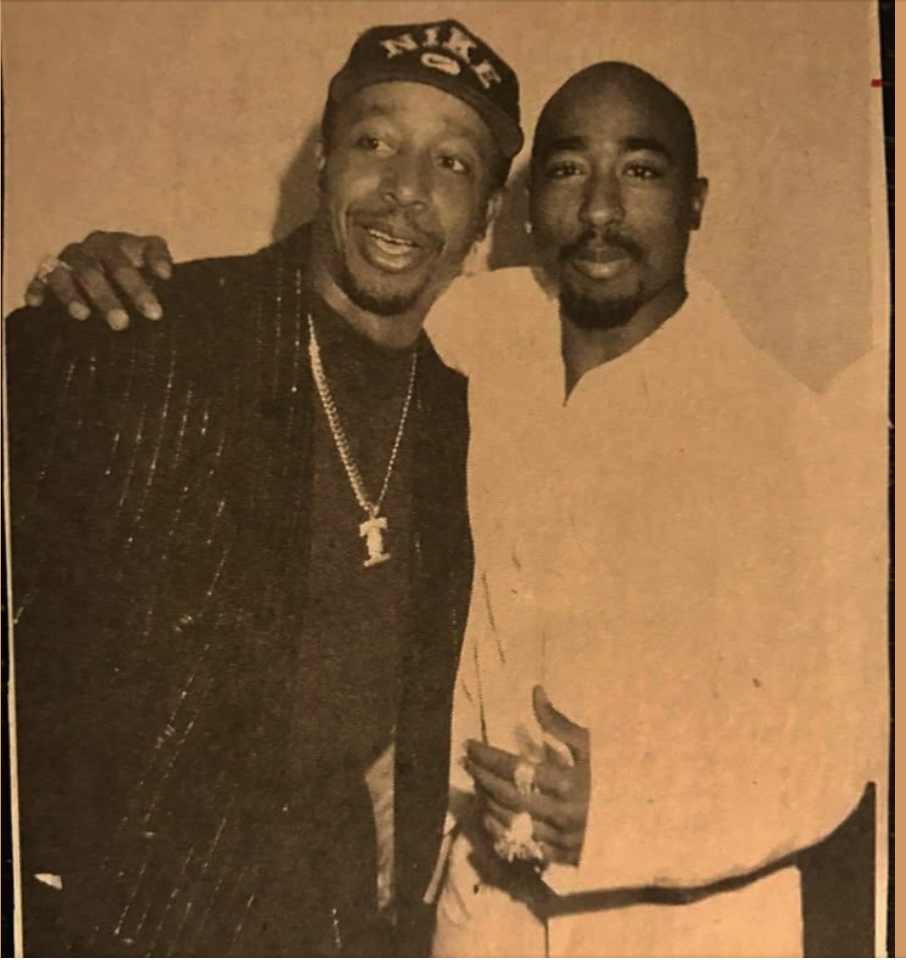
But, unfortunately for Hammer, he achieved this tremendous crossover success during an era in which the idea of being “pro-Black” was changing, and rappers themselves were at the forefront of making the change. Hammer’s star power started to slip in 1991, when none other than Tupac Shakur publicly dissed him for “diluting rap” on a KRON TV Hip Hop special. This is what Tupac had to say about Hammer:
He did sell 10 million records…[but] selling records don’t mean nothin’. I mean, I’m down with him because he’s a brother and he’s making his mail, but…he’s playing that Sambo role and the reason everybody’s buying his record is because he’s no threat and everybody wanna see Sambo dance.
Cue the entire studio audience erupting in applause.
“Sambo” is a racial slur that originally meant docile, irresponsible, and lazy. None of this had anything to do with Hammer, neither in his personal biography, nor his public persona. But, in later minstrel depictions of the Sambo, he’s shown as high-stepping and smiling big to entertain white audiences. And it’s this later, minstrel depiction of the racial caricature that the well-read Tupac was leaning on.
One of the most incredible things to me about watching this clip of Tupac is that it’s not clear anyone in the audience even knows who he is. His first appearance on a rap track was in January 1991—mere months before this special. He was featured on Digital Underground’s “Same Song.” His breakthrough debut album, 2Pacalypse Now wouldn’t be released until November of that year. At no point in the clip is he referred to as “Tupac” and the audience members don’t seem to be the slightest bit surprised to be sitting next to him. He seems to be simply another brotha, a hip-hop head going to a live taping to discuss the state of rap. It didn’t matter that he was a rap nobody. What a young Tupac said had touched a nerve.
It was, after all, the early 90s, when rap was going from being about fun and games, social critique, or even love, to an elevation of gangsta -ish. In this evolution of the genre, blackness increasingly meant repping the hard knock life. It meant being “tough” and “hard” in the mold of Ice Cube—who also publicly hated on Hammer and was one of the many rap voices crying “sellout” when Hammer was brought up.
All at once, hood niggas were re-defining blackness in terms that had nothing to do with Black pride, respect for other Black men—much less Black women—or giving back to the community you came from. In the new world that was being forged by gangsta rap, “pro-Black” got collapsed onto being a “real nigga,” which meant growing up poor, being willing to throw hands or pull guns, stacking your chips, and trolling for “bitches.” To be dancing and having fun—which lol at Tupac’s hypocrisy because that’s exactly what Digital Underground was all about—was to be “sold out.”
But what a funny, self-serving maneuver on the part of Tupac and the other thugs, real and fake. Just as he was about to release his own album repping Thug Life as his brand, suddenly hood shit was presented as the only kind of blackness that was “real.” And only self-described “real niggas,” like him were willing to stay down, by refusing that non-threatening, white people entertaining, product-endorsing pop image.
The problem, of course, is that when you look at this new way of viewing “acceptable” blackness, what you find is that the only place it’s a threat is to the Black community itself. Glorifying drug dealing, robbing, shooting Black men, and slapping Black women, these entertainers were a threat, but not usually to white America or racist structures. The Black people who were a threat to the American racial order, like Claudette Colvin, Rosa Parks, Malcolm X, or even MLK Jr, had been incarcerated and beaten with clubs. Or murdered. They had not, as Tupac, N.W.A, Ice T, Snoop, and a host of other rappers have done, capitalize on young white men’s pulsing desire to see that other, other racist stereotype. You know, the one where instead of Black men playing the Sambo, they play the Buck?
There’s a lot of Tupac’s music that I love. But let’s not act as if he and a bunch of other “gangsta” or more broadly “gangsta-bling” rappers didn’t routinely give us the Buck: hyperviolent, hypersexual, uncontrollable, and savage. A famous Black male author (whose presentation I only heard about later) came to UCI to give a talk. In it, he described rap as “Buck music.”
* * *
Lately, some Black people have decided to revisit the curious case of MC Hammer. They’ve started to wonder: weren’t them other rappers just jealous? I mean, Nelly hated on MC Hammer for endorsing Taco Bell, then had the audacity to link up with the brand for a Celebrity All-Star game and other purported endorsements. Lil Nas X—while not a gangsta is still a rapper—has been Taco Bell’s Chief Impact Officer since 2021.
I thought Snoop was gone when he did that duet with Katy Perry. But by then, most people were cool with gangsta rappers going pop and amassing high-profile sponsorships, so long as their image remained “hard.” I don’t have to tell you that no one said a single thing about Snoop’s Pepsi endorsement.
Snoop and Ice Cube have, like MC Hammer, been known to give back to their local communities. And Hammer and Tupac ultimately made amends by the time Hammer signed to Death Row Records. Apparently, Tupac even wrote some songs for him. (I don’t know how to make that make sense—although there’s some buzz about Hammer potentially being more thug than he had let on.)
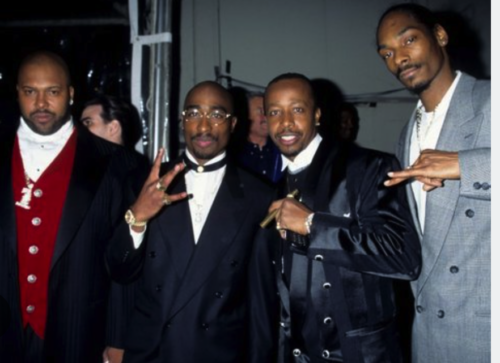
But for me, a pressing question is about what gangsta rappers took from Black communities by promoting such a narrow, non-productive, and stereotypical, version of blackness, and especially of Black masculinity. Why have so many Black people, for so long, been so willing to cheer for Buck music? Didn’t the music of Marvin Gaye and James Brown serve to instill pride and love? How can we look at the state of Black affairs and think our sonic signature has nothing to do with our devolution as a community?
I think a lot of these rappers are doing their own high-stepping to entertain white men. White men are the single biggest demographic consuming rap. How come nobody’s ever just come out and accused gangsta rap of selling out? After all, if 50 Cent is to be believed, a good number of the so-called gangstas are fake anyway, which is why he coined the term "Wanksta."
Maybe we were afraid that if we didn’t publicly endorse it, we’d be treated like we were not “down,” not “keeping it real,” and would be hated on for acting the part of the amenable, docile Black. Except, that’s exactly what we did by pretending the Buck image was somehow our truth.