
Your BMI Will Creep Up As You Age
August 27, 2026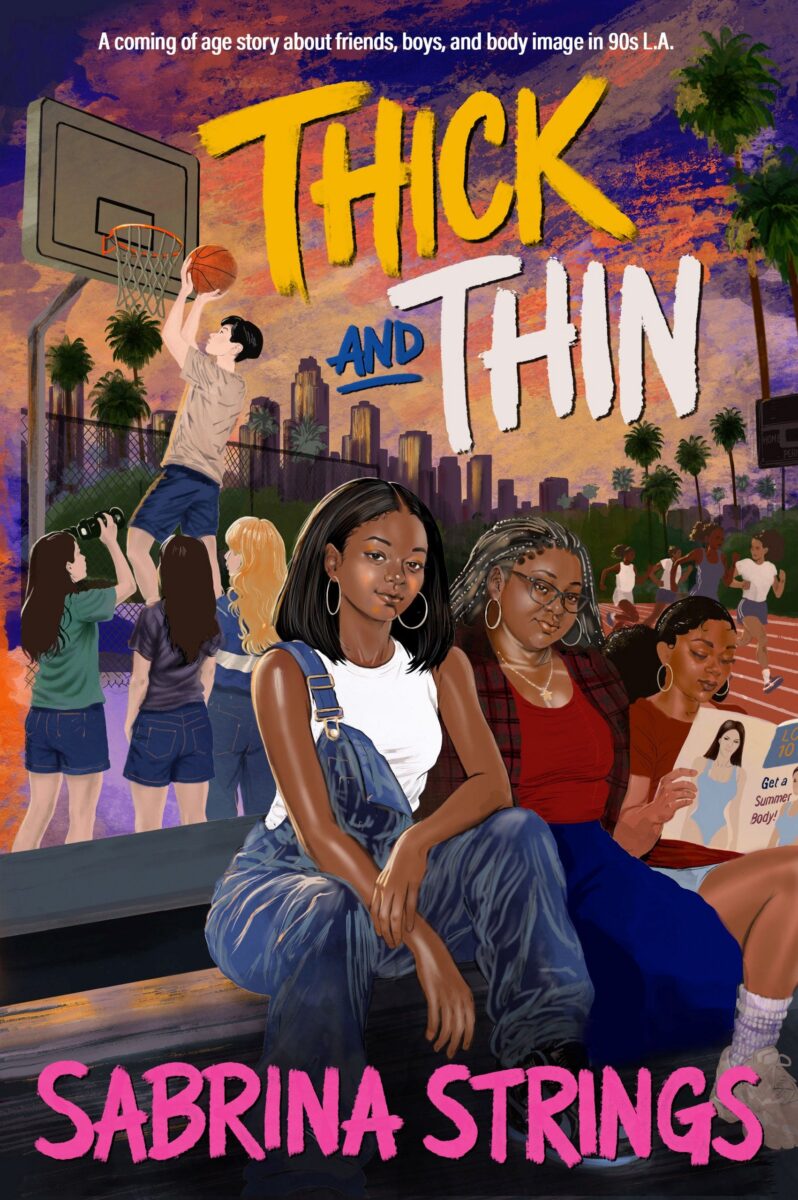
I remember eating with abandon. Before the age of 17, my only concern about food was when I would get my hands on it, especially if my grandmother, Grandma Jeana, was cooking.
You see, my grandma could burn, y’all. Friends and family members—and sometimes people in the neighborhood—would turn up on any given night just before dinnertime. They would always play it cool, like, “Oh, you know, I was just in the neighborhood and thought I’d stop by for a visit,” while smizing within an inch of their lives. And they never protested when invited to stay for dinner.
But when I was 17, something happened. I was a senior in high school, and people stopped seeing me as a kid and expected me to step into my future as a “responsible adult.” Somehow, one of the main things becoming an adult meant was making “sensible” food choices, in order to guard against fatness and[CG1] cultivate thinness.
What size are those? Those look like pretty big jeans.
Uhh! How can you eat like that and still be thin?
If I were your size, I would wear a bodysuit every day.
Too big for some. Too small for others. Then there were the people who thought I was just right. I was a goddamn Black Goldilocks.
The consternation people showed at the idea of watching a Black girl become a fat Black woman. The fascination with figuring out how to subdue a Black girl’s body. If you read Frantz Fanon, you’ll know that these two things, fear and desire, aren’t opposites; they’re two sides of the same coin. Negrophilia on one side, negrophobia on the other. And where you find one, you’re sure to spy the other.
In my senior year, it felt like suddenly everybody had an idea about how my body ought to look. And what I needed to do to get there – or stay there. My body was no longer simply existing; now it narrated my character. And I wanted to be a good person.
It wasn’t an eating disorder in the 90s. It was a diet. And a regimen was a good thing. Everybody was supposed to have one.
And I was never hoping to be Ally McBeal thin (and yes, I did take you back!). This is what everybody says about Black culture, right? That we have more expansive beauty ideals. Therefore, Black girls are less preoccupied with thinness, and because of that less vulnerable to developing eating disorders.
But the reality is that disordered eating is more common among Black women and girls than people know.
* * *
There is some truth to the idea that Black girls aren’t usually driven to be heroin-chic. Researchers have repeatedly found racial differences in preferred body size and body satisfaction that show Black folks more content with a little more flesh. But when researchers actually ask Black girls and women how they relate to food and their bodies, the picture gets messier. Liking a little thickness doesn’t translate to an across-the-board reduction in eating disorders. It turns out that some disordered eating behaviors may be more common among Black women and girls than among their White peers.
A systematic review of 38 studies found that Black women experience binge eating at rates similar to—or sometimes higher than—White women. One community study found recurrent binge eating among 4.5 percent of Black women, compared with 2.6 percent of White women. These findings are, perhaps, not that surprising. Binge eating is commonly a trauma response, and Black girls and women face myriad social and personal traumas. Roxane Gay, for instance, chronicled her binge eating as instigated by a brutal sexual assault as a pre-teen.
The rates of disordered eating become even more startling when body size enters the picture. We all know there’s a panic surrounding the purported “excess weight” of Black girls and women. This weight stigma can contribute to disordered eating among Black girls.
In a study of 776 African American adolescents, including girls and boys, only 3 percent of youth categorized as “normal weight” reported trying to control their weight in the past year through vomiting, laxatives, diet pills, or starvation. Among those classified as overweight, the figure was nearly 17 percent. Among those classified as ob*se, it was more than 19 percent.
Another study followed more than 700 African American girls, averaging about twelve years old, over six months. More than half were classified as overweight or ob*se. About 60 percent wanted to be smaller. And higher body weight predicted increases in dieting over time, partly through increases in body dissatisfaction.
* * *
These findings shatter the myth that being surrounded by people who “appreciate curves” somehow neutralizes the pressure to lose weight.
It doesn’t.
A Black girl can want curves and want to be thinner. That was me. I wanted desperately to have a butt and breasts like Kenya Moore’s in Nas’s 1996 “Street Dreams” video. But I also wanted people to know I could be trim, like all the smart, capable women in the magazine ads. And I was no anomaly; an earlier 1992 study showed that 61 percent of Black high-school girls in that sample reported dieting.
Black women and girls are betwixt and between. We inhabit a subculture where the straight men often want fuller hips, thighs, and breasts, like they’re judging a 2-piece at Popeyes. But Black men and women might still warn you against becoming “too big.” After all, we still live in a country that relentlessly warns us against becoming fat.
Black women and girls gotta worry
about being thick and thin.
* * *
The stereotypical image of an eating disorder has been misleading. We have been trained to look for people with anorexia whose very thin frames and refusal to eat cause immediate alarm. That image leaves many Black folks out.
But many Black women and girls are on (clears throat) “weight-release” journeys. Some are hoping to be “slim-thick.” Others might be doing it because everybody—including their doctors—has told them losing weight would be “good” for them.
We may miss the girl who is trying desperately to make herself smaller while everyone assumes that, because she is Black—and/or because she is fat—she must be comfortable in her body. The research increasingly tells us the situation is not that simple. Black girls have been struggling with food and body image too. More of us need to reckon with why it has been so easy to ignore for so long. And then we can push toward actual body autonomy among Black women and girls, not just the assumption of it.
Read more about my experience dieting—alongside so many other Black women and girls—in my new book, Thick and Thin: A coming of age story about friends, boys, and body image in 90s L.A. Get yours for the limited-time pre-order sale price.
