
The Obesity Epidemic’s Dirty Underwear
March 12, 2026
The Obesity-Diabetes Hoax
March 26, 2026The Obesity Epidemic’s Dirty Underwear
March 12, 2026The Obesity-Diabetes Hoax
March 26, 2026Are Race Scholars Paranoid?
I could tell you a lot of memorable stories about graduate school. Once, in 2011, my final year of graduate school, someone broke into my office, which was shared with four other grad students. I immediately became the prime suspect. (I’ll regale you with the full story on that one some other time.)
Around the time of the break-in, I was having a conversation with one of my office mates. We’ll call him Jason. Jason is Asian American. Like me, he was pursuing a PhD in Sociology. Unlike me, Jason’s work is not about issues like race/ethnicity, gender, or scientific biases.
We were sitting in the sociology lounge/computer lab. There were iMacs with the cheeky translucent blue casing. From 2003. These computers were never free. You considered yourself lucky to be able to hop on one to check email or print your paper.
As I sat checking my email one day, Jason sat behind me eating an apple. Then out of the blue, he said,
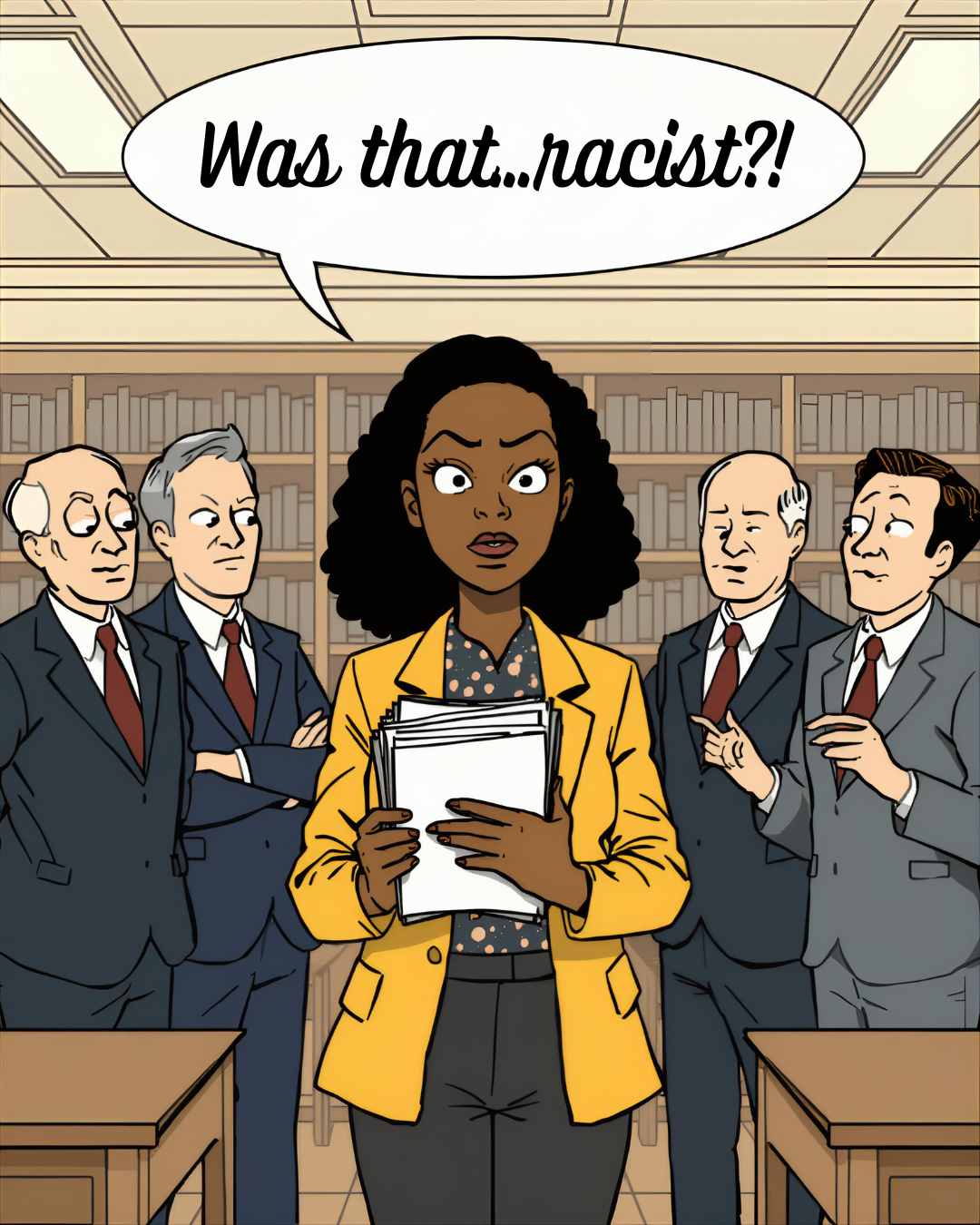
“I think race scholars are paranoid.” He munched his apple, awaiting my response.
I lifted my hands from the keyboard and turned towards him. Jason loved playing the provocateur. I figured he was just trying to rile me up.
“What are you talking about?” I asked, a smile playing around my lips.
“No, listen. Every time you talk to a race scholar, they always think everything is about race. You could bring up anything having to do with society, and a race scholar will be like, “well, you know, it’s racist.” He said. He rubbed his chin, imitating a race scholar considering the facts, then landing on that one, inevitable conclusion.
I laughed out loud. Partly because of the shade he was throwing at our faculty. But also, partially because now that he’d said it, I could see how he arrived at this conclusion.
At the time, I didn’t correct him. I didn’t know how! Were race scholars just paranoid—or worse lazy?!
Now, as someone who’s worn the label of “race scholar” for several years, I can better understand what his question is actually pointing towards.
* * *
Let’s go back to the 1950s. Hoop skirts, bobby socks, Leave it To Beaver, separate drinking fountains, segregated sports, people of color being barred from any public place deemed “white,” and in general all the publicly-sanctioned racism any white supremacist could hope for. Vintage Americana.
But already the Civil Rights Movement was taking hold in a real way. This is not to say it captured the hearts and minds of most white Americans. It fundamentally did not. Despite the fond reminiscing many white folks today like to do about the movement era, know that the movement was always hugely unpopular with white folk.
Nevertheless, the movement was making tremendous strides in changing the perceptions of people of color. It was a full-on upheaval. American politicians wanted that last part, the social upheaval, to end. They knew they had to give the leaders of the movement something. What they delivered was a packet of civil rights legislation, the most notable of which was the Civil Rights Act of 1964, which outlawed the segregation of public places, and discrimination on the basis of race.
What this legislation effectively did was put a legal end to the problem of Jim Crow—itself inaugurated by Plessy v. Ferguson. It did not, and fundamentally could not—given the hotly contested nature of integration—ensure that Black folks and other POC would receive equal treatment in every place, all the time.
With these new laws in place, white people and everyone else knew they could not be caught publicly discriminating. It was illegal now. They could lose face. They could lose their jobs.
So racism—still popular—but now unlawful— went underground. It became racism without racists. All of a sudden, no one was doing anything discriminatory to Black folks, or other POCs. “Black people aren’t being mistreated! No one here has called anybody the N-word! Black people just _______” Insert: don’t try hard, aren’t prepared, given the proper training. Anything that places the burden at the feet of the accuser.
Now, calling anyone, but especially a white person, a “racist,” is an explosive charge. This is so culturally recognized that MTV dedicated an entire episode of their Decoded series to the question, titled “Is Racist the N-word for White People?”
The hosts of the beloved, now-defunct podcast Another Round with Heben and Tracy devoted an epi of their iconic pod to the same issue. They reminded us that the word “racist” carries more social weight than any race-related slur (think Richard Pryor’s favorites: honky and cracker) Black people have ever tried to deploy.
Not even Trump wants to be called racist.
So now we understand the switch. Before 1964, racism didn’t need to hide. It was public. Vitriolic. In your face — like Norman Rockwell’s disquieting portrait of six-year-old Ruby Bridges being escorted to school by federal marshals past a wall of screaming white adults throwing tomatoes. Racism was on parade.
Now, that animus is cloistered. Its fire vaporized. It seeps, invisibly, into every nook and cranny of “integrated” life.
Racism was a public cry. Now, it's a dog whistle. Designed to be deniable. And to make those claiming it--especially as part of their careers--seem like they are “crying wolf,” and not credible. To make us seem paranoid.
* * *
But here are the facts:
75% of Black Americans report experiencing racial discrimination. The number for other POCs is 50-76%.
That’s the overwhelming majority. Surely that many people ain’t making it up.
The problem is there is no Full and Complete Handbook of Racist Acts that BIPOC folks can reference. We can’t turn to other people and be like, “Uhhhh, see Chapter 6, Article 11. You just violated the rule that ‘curious fingers cannot caress someone else’s curly locs without invitation.’ So, I’m giving you a racist demerit.” This doesn’t exist (yet, my guy!).
Discrimination feels like paranoia because there is no arbiter of truth. No referee blows the whistle. No authority steps in and says: yes, that was racism, it counts.
So we race scholars are having to interpret behavior. Name racism as we see it. We’re having to read between the lines in just about every situation in which something happens, and a BIPOC person was made to feel small. Was it on purpose? Was it racial?!
But there’s deeper layer of scar tissue beyond the suspicion. It’s about what happens to the BIPOC folks who actually experience discrimination:
- 79% of adults who experienced discrimination in the past year reported increased worry or stress.
- 40% of those experiencing daily discrimination reported often or always feeling anxious
- 65% reported sleep problems
- And among students reporting racial discrimination, 54.3% reported persistent feelings of sadness or hopelessness.
These are real, negative effects for our contemporary discriminatory reality. Because it’s harder to put your finger on, you’ll internalize it more, with disastrous health consequences.
* * *
Jason is an intelligent, thoughtful guy. But he misunderstood the critical reason for the vigilance of race scholars, and many other BIPOC folks besides, about racism. I’ll give it to you one last time:
There is no agreed-upon list of verboten racist acts that we can point to and say, Aha! Gotcha!
A person, group, or business seems to be treating you differently than someone else — usually someone white — would be treated. But how do you prove that? Most of the time, you can’t.
That gray zone — between what you felt and what you can prove — IS the problem.
And fact: The person you have to report to about it is usually themselves white.
The problem is not that race scholars, or other BIPOC folks, are constantly imagining things. The problem is that we have never been given the tools to process what we see — or to stop the seeing from slowly hollowing us out.
COMING SOON What if the answer isn’t to see less — but to respond differently? I’ve been building something. A new framework for addressing discrimination. Not how to survive it. How to stop it from owning you.