

How Men Honor Women
July 2, 2026
Your BMI Will Creep Up As You Age
August 27, 2026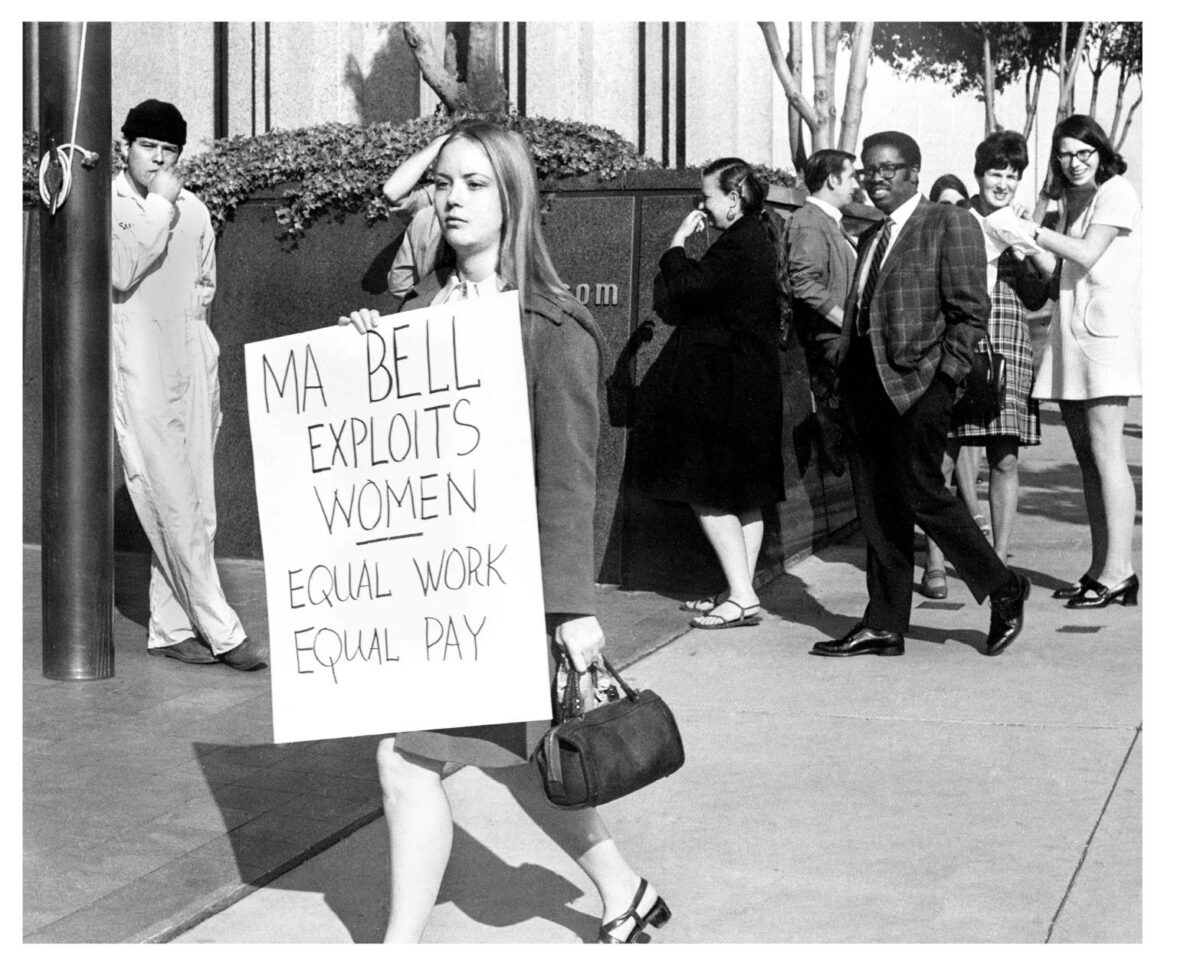
So, there I was on Audible, scrolling urgently for my next good listen. I had just finished Steinbeck’s East of Eden. Its vivid descriptions of white families living between the gutter and the ultra-rich — and of one wise Chinese servant — were poignant and rich. Closing that immersive tale, I wanted to step right into a new one.
Instead of being enmeshed in lives so different from my own, I was looking for a story that felt familiar. Maybe one by a woman of color. A narrative that could keep me inside its world page-by-page because I could see myself in it.
Sifting through the titles, I landed on a name I didn’t recognize, but whose catalog seemed promising. It was a woman with a Spanish last name. Possibly Latina, I thought. This woman has a battalion of books. Browsing through them, I wondered, how have I never heard of this woman before?!
I did my research. Her Spanish last name came from her husband, who is Latino. She is white. And she writes in the single highest-grossing section of commercial fiction in the world: romance. That explained her bounty of books; romance authors produce prodigious output, in part because the stories have an obvious formula: girl meets boy, there is obvious chemistry, they do the “will they or won’t they?!” dance that usually involves another party working to undermine their union, and then, after much nail-biting, they, of course, end up together.
Normally, that would have been enough to keep me paging past her work. But then I saw that one of her most recommended titles had a Latina MD as the protagonist. That had me just curious enough to dive in.
(sigh)
Here’s what got me: the book was well-written. That, for any writer, will go a long way toward keeping you in the thing. And she was funny. She had great turns of phrase you didn’t see coming.
But as I got deeper and deeper into the story, I could see that her being an MD was almost beside the point. She was the caretaker of her younger brother and a jilted divorcée, nursing an avoidant attachment style while rapidly falling in love with the man who is her rival for the promotion she wants. But more than anything else, she is so beautiful—or so her lover keeps telling her. And he, we learn, is the-most-incredibly-hot-white-man. And the most sensitive. He doesn’t want her job—he only wants to help heal her. To love only her. And though they work in the ER, most of the triage surrounds their relationship.
I was annoyed that a woman doctor would not have heard of therapy to help heal her wounds before her lover suggested it. Annoyed, too, that he would have to be hot-n-buff-n-sensitive to be a good catch. That she would have to be doe-eyed, long-haired, trim, and of course selfless. Add that to their income, and the formula is a great reminder of who gets to have a romance.
Turns out, though, that romance novels are addictive. So next thing you know, I, the woman who wrote a book auguring the death of romance, finished this romance novel and dove into another one by the same author. Same deal: “gorgeous” damaged woman artist who fears intimacy finds a rich and famous male artist who wants to “save” her. And a third: “stunning” damaged nurse who fears intimacy meets broke-but-loving man who literally tries to save her from a burning building. In all of them, the ending is moving in together, kids, the wedding or the promise of all three. The committed, permanent future with a male partner is the “happily ever after.”
After the third book, though, I spied something else.
Romantic tales from the 19th century saw cornered (if wealthy) women desperate to marry the same type of sexy and sexually skilled, usually rich, but always selfless man that we find in modern romantasy. The marriage was the only happily ever after afforded a woman in those days. Now, with women’s careers ascendant, women’s happily ever after as written by women still tracks through a husband.
I thought, Betty Friedan didn’t see this coming.
Then, I got to wondering: if women can have just about any career now, why is marrying a man still the benchmark of success in straight women’s own fantasies?
* * *
In 1963, Betty Friedan gave a name to the thing that was quietly eating white middle-class women alive. She called it the problem that has no name: the educated, capable housewife vacuuming a home and tending to the kids and meals. A role she’d been promised would be enough to fill her up. She was losing her mind because it wasn’t. Friedan’s prescription was simple and, for its moment, radical: Get out. Get a job. Get a self beyond the confines of the kitchen.
Of course, non-white, working class, and poor women had been working, mostly thankless and underpaid service jobs. This isn’t what Friedan meant. Women should have access to every type of job. To high-paying careers. Forced domesticity was a cage. A career was a woman’s freedom.
Nina Hamberg’s Change Has a Female Face
This idea sounded like a church bell. It prompted all sorts of women to hit the streets as if it were their ministry. Not the first person to articulate this view, Friedan was nevertheless a powerful voice. Her work was one important node in the development of the Second Wave of Feminism.
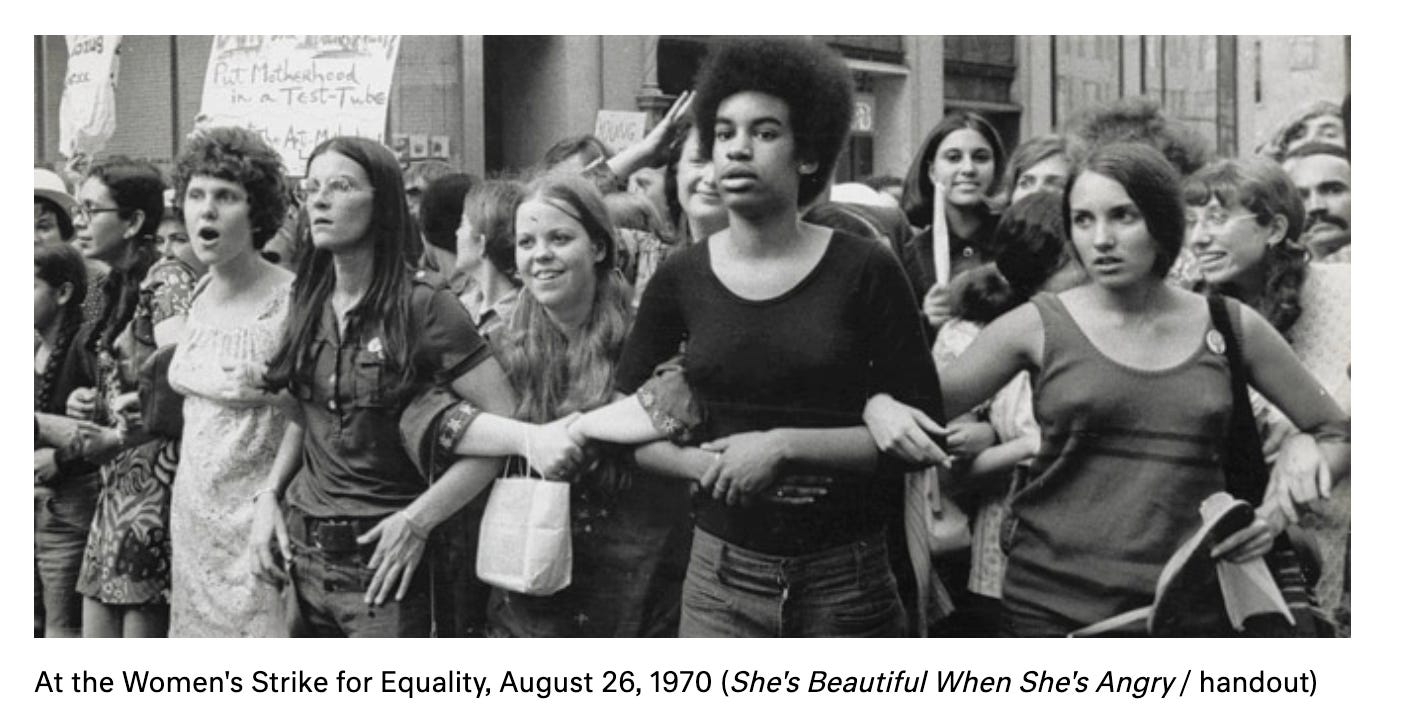
But here’s what Friedan couldn’t see from where she stood, and what makes her book a cold read now: the thing she called the key to freedom, public work for a fair wage, has become a nearly universal requirement. Something demanded cannot be liberatory. Meanwhile, the thing she called the cage, marriage, was intentionally re-jiggered as aspirational.
In 1963, 65% of adult women were married. Among all women 16 and over, 38.3% were in the labor force — and among married women living with a husband, just 33.7%.
Now check 2023. Fewer than half of adult women — about 47% — are married. Among all women 16 and over, 57.3% are in the labor force. Among women in their prime working years, 25 to 54, participation hit 77.4% — the highest rate ever recorded.
Women WON! Right?!
Not exactly.
Women already by the late 20th c started clamoring for the thing the feminists of the Second Wave were once desperate to escape. What was once a cage is now what women fantasize about at a growing rate globally.
* * *
Consider what made work desirable — liberating, even — in 1963. Not the work itself — the filing, the typing, the accounting, the commute…the same shit that bored men senseless. It was the idea of earning a living so you didn’t have to depend on a man for security.
What made work a target of liberation was that it was foreclosed. Most jobs and careers were behind a locked door, especially those that were higher paid. They were men’s clubs. In 1963, landing a job or career that enabled a woman to take care of herself was rare. An achievement.
Now you see women in the workforce at nearly equal numbers to men. Most women now have to work. Two incomes are the price of a middle-class life for many families; unless you’re in a highly-paid career, the single-income life can be financially perilous.
And a highly-paid career demands a great deal of work. I’ve never heard of a woman fantasizing about quitting her job as a clerk to be an on-call doctor working 80 hours a week. Or leaving her job at a non-profit to become a corporate lawyer racking up the same number of hours. These dreams may exist, but books about them are scanty. Because even in the age of Friedan, the dream wasn’t about doing the mind-numbing work. It was about having the freedom to.
We do not now have the freedom to work. We have the demand to work. Once romanticized as an escape from domesticity, working has become essential for most women who want to continue to live indoors. And even if you love what you do, it’s still exhausting most days. And you don’t get to stop.
Work is the cage now.
And here’s an even colder part: a prize is only a prize if not everyone can have it. People like distinctions, whether they cop to it or not. Every society with a modern economy has distinctions of high and low. Work being rare for women gave it an aura of elevation. Work being a requisite makes it something to resent.
So the distinction now has circled back to the ring.
I told you about this from a different angle in The End of Love. There, I showed that powerful men staged a protest against feminism beginning as early as the 1950s. They used Playboy and other men’s magazines to encourage men to stay away from the altar for as long as possible. They did this as a direct backlash to women’s growing “careerism.” They said only marry good girls, lavishers, hot mamas. No gross feminists! And in doing so, they made themselves the scarce resource women were supposed to clamor to get. It’s cynical af. And it worked.
The truth has been in front of us for years. The successful woman who walks into a room of other successful women and introduces herself by leading with her diamond-encrusted ring finger. Your friend who complains endlessly about her husband not doing a thing around the house. She sees both her therapist and a couples therapist. But she revels in the size of the rock on her left hand, and the house they can co-afford, while rolling her eyes at the actual “partner.”
And remember that Amy Schumer special where she described not just the love she had for her husband, but how, HER AND ALL HER FRIENDS DID IT! They all got married!!!!!!!!!!!!!! (I didn’t hear her say anything about her and her friends having splendid careers in comedy—though that seems to be true as well.) Her marriage has since ended, which was shattering. And we can have compassion for her grief, while also clocking that what she was cheering was her own, and her homies’ ability to do something a decreasing number of women do, whether from preference or lack of options: secure that baguette.
* * *
So the old romantic fantasies have returned with a vengeance. Between 2020 and 2023, romance print sales more than doubled — from 18 million print units a year to 39 million, in the US alone.
And what happens in them? A hot rich man marries you (as in Sophie Kinsella’s and Helen Fielding’s books) and you are now rich! TG b/c now you no longer have to clock in. A hot buff sensitive man heals your wounds and marries you (Abby Jimenez’s lane) and your housing and heart get to stabilize while your checkbook gets balanced. But oops! Only if you’re hot and young and white-enough to be chosen-hehehehe-which is the same requirement across most romantic novels and Playboy.
The marriage is the new freedom. Not freedom to do something like work. Freedom from the fate of endless work for the mere hope of a financial come-up that the women who don’t qualify for a romantic marriage are facing.
* * *
Sixty years after Friedan, we’ve run her revolution in reverse — not because anyone lost, but because the status symbol moved. Women wanted work because work was often the thing men were denying them. They wanted access. Today, many women want the ring because it’s often the thing many modern “men” (incels and f*bois and players and pimps…) are denying. And it might just be a requirement if you want to stop working.
The feminist victory built the new trap. The workplace door opened and quickly became a version of Escape Room. Marriage was deliberately withheld and became a fantasy.
And here’s the coldest part of all. Marriage still often means a wife is the household’s unpaid staff: cook, cleaner, therapist, hostess, and object of desire, all in one body. It didn’t release women from these jobs. It handed them a sixth — the career — and kept every one of the others.
“Having it all,” that shimmering promise, turned out to mean doing it all: the full domestic load, plus a paycheck, plus the standing order to stay “hot” through all of it. Only now, most women get the outside work, and many clamor for the right to do the domestic thing. Even though what it looks like on the inside didn’t change much. At least they can say they got in.
Women’s liberation, then, can’t come from work or marriage. It can only come from not having to compete for scarce resources. I like fantasizing about that.
